
Introduction
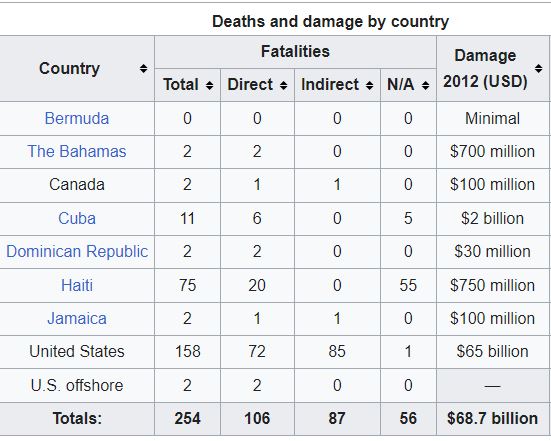
In October 2012, Hurricane Sandy wreaked havoc over a large area from the Caribbean to the U.S. Middle Atlantic Coast (including New York City). At its peak, Sandy reached Category 3 (major) hurricane status. Sandy was the largest Atlantic Hurricane on record by diameter. Tropical storm-force winds extended a whopping 1,150 miles from the center . Damage to the U.S. amounted to 70 billion dollars back then (about 100 billion in 2026 dollars) and it resulted in over 250 deaths. Forecasting of this event was very good but interagency coordination (mainly between the National Hurricane Center and the National Weather Service) and the resulting 11th- hour communication to the public left a whole lot to be desired! More on that later.
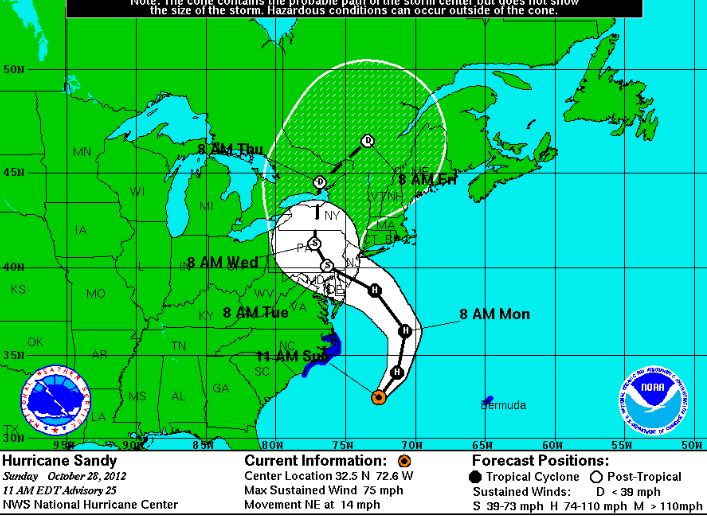
A good NHC track/cone the day before Sandy’s landfall.
Sandy’s Odyssey
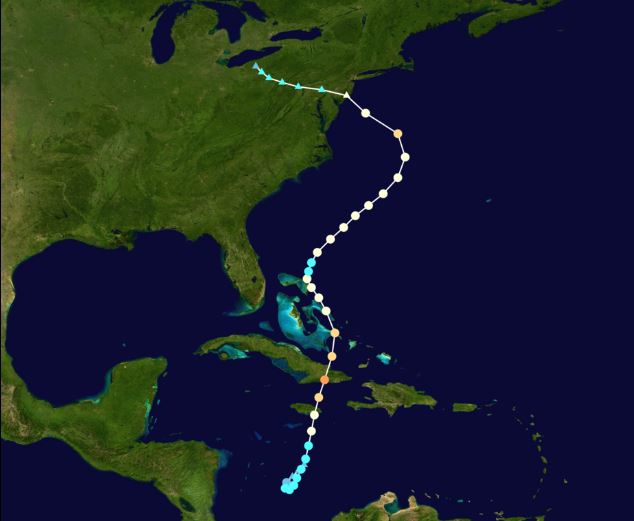
Sandy began as a low pressure system in the Caribbean, well south of Jamaica, on October 22, 2012. It quickly became a tropical depression and then a tropical storm. It was upgraded to a hurricane on October 24th as it approached Jamaica. Later in the day, Sandy made landfall as a Category 1 hurricane.
Just offshore of Cuba, Sandy rapidly intensified to a Category 3 hurricane, with sustained winds at 115 mph and at that intensity, it was a major hurricane. Sandy made landfall in Cuba on October 25th. The land mass of Cuba disrupted Sandy to a point where it was no longer a tropical cyclone as it departed Cuba.
On October 28th, Sandy became a tropical storm again and later a Category 1 hurricane in the western Atlantic, east of thee U.S. Coast . On October 29th, Sandy briefly reached Category 2 status before weakening back to a Category 1 as it mad a turn toward the U.S. East Coast. Sandy mad landfall in New Jersey that evening. I’ll go over the last couple of hours before landfall, and the “official” status of Sandy, later.
Preparing For Sandy
All in all, preparations were good ahead of the event, both from state governments and emergency management !
For example:
Caribbean
After Sandy became a tropical cyclone on October 22, the Jamaican Government issued a Tropical Storm Watch Early on October 23, the watch was replaced with a tropical storm warning and a hurricane watch was issued. At 1500 UTC, the hurricane watch was upgraded to a Hurricane Warning, while the tropical storm warning was discontinued. In preparation of the storm, many residents stocked up on supplies and reinforced roofing material. Acting Prime Minister Peter Phillips urged people to take this storm seriously, and also to take care of their neighbors, especially the elderly, children, and disabled. Government officials shut down schools, government buildings, and the airport in Kingston on the day prior to the arrival of Sandy.
Cuba/Bahamas/Bermuda
The Cuban Government posted a Hurricane Watch for seven provinces on the morning of October 23rd The Hurricane Watch was switched to a Hurricane Warning three hours later. The Bahamian Government, also on October 23, issued a tropical storm watch for several islands, Tropical Storm Watches extended all the way up to Bermuda.
United States
Utilities and governments along the East Coast attempted to head off long-term power failures Sandy might cause. Power companies from the Southeast to New England alerted independent contractors to be ready to help repair storm damaged equipment quickly and asked employees to cancel vacations and work longer hours. Researchers from Johns Hopkins University in Baltimore, using a computer model built on power outage data from previous hurricanes, conservatively forecast that 10 million customers along the Eastern Seaboard would lose power from the storm.
President Obama signed emergency declarations on October 28 for several states expected to be impacted by Sandy, allowing them to request federal aid and make additional preparations in advance of the storm. Flight cancellations and travel alerts on the U.S. East Coast were put in place in the Mid-Atlantic and the New England areas. Over 5,000 commercial airline flights scheduled for October 28th and 29th were canceled by the afternoon of October 28 and Amtrak canceled some services through October 29 in preparation for Sandy. In addition, The National Guard and USAF put as many as 45,000 personnel in at least seven states on alert for possible duty in response to the preparations and aftermath of Sandy.
Florida
Schools on the Treasure Coast announced closures for October 26th.
North and South Carolina
North Carolina Governor Beverly Perdue declared a state of emergency for 38 eastern counties on October 26, which took effect on the following day. By October 29, the State of Emergency was extended to 24 counties in western North Carolina, with up to 12 inches of snow attributed to Sandy anticipated in higher elevations. At least five sections of the Blue Ridge Parkway were closed,
Virginia
On October 26, Governor Bob McDonnell declared a state of emergency. The U.S. Navy sent more than twenty-seven ships and forces to sea from the Naval station at Norfolk Governor McDonnell authorized the National Guard to activate 630 personnel ahead of the storm.
Washington, D.C.
On October 26th, Mayor Vincent Gray declared a State of Emergency, which President Obama signed on October 28th. Federal offices in the area would be closed to the public on October 29–30. The Metro service, both rail and bus, was canceled on October 29th due to expected high winds, the likelihood of widespread power outages, and the closing of the federal government. The Smithsonian Institution closed for the day of October 29th.
Maryland
Governor Martin O’Malley declared a state of emergency on October 26th. On October 28, President Obama declared an emergency in Maryland and signed an order authorizing the Federal Emergency Management Agency to aid in disaster relief efforts.
The Maryland Transit Administration canceled all service for October 29th and 30th. The cancellations applied to buses, light rail, and Amtrak and MARC train service.] On October 29, six shelters opened in Baltimore and early voting was canceled for the day. Maryland Insurance Commissioner Therese M. Goldsmith activated an emergency regulation requiring pharmacies to refill prescriptions regardless of their last refill date. On October 29th, the Chesapeake Bay Bridge was closed.
Delaware
On October 28, Governor Markell declared a State of Emergency, with coastal areas of Sussex County evacuated.
New Jersey
Preparations began on October 26th when officials in Cape May County advised residents on barrier islands to evacuate. Voluntary evacuations extended all the way up to Ocean County. On October 28th, Hoboken Mayor Dawn Zimmer ordered residents of basement and street-level residential units to evacuate, due to possible flooding. On October 29th, residents of Logan Township were ordered to evacuate.[
Pennsylvania
Governor Tom Corbett declared a state of emergency on October 26th. Philadelphia Mayor Michael Nutter asked residents in low-lying areas and neighborhoods prone to flooding to leave their homes and move to safer ground.
On October 29th, Philadelphia shut down its mass transit system.] On October 28, Harrisburg Mayor Linda Thompson declared a state of disaster emergency for October 29. Electric utilities in the state brought in crews and equipment from a number of states all the way to New Mexico.
New York
Governor Cuomo declared a statewide state of emergency and asked for a pre-disaster declaration on October 26th, which President Obama signed later that day. By October 27, major carriers canceled all flights into and out of NYC area airports, and the Kong Island Railroad suspended. The Holland Tunnel was also closed. On Long Island, an evacuation was ordered for South Shore and in elevations of less than 16 feet (4.9 m) above sea level on the North Shore mandatory evacuations were ordered for residents of Fire Island. Most schools closed in Nassau and Suffolk counties on October 29th.
New England
Connecticut Governor Daniel Malloy partially activated the state’s Emergency Operations Center on October 26th and signed a Declaration of Emergency the next day. On October 28th, President Obama approved Connecticut’s request for an emergency declaration, and hundreds of National Guard personnel were deployed .On October 29th, Governor Malloy ordered road closures for all state highways. Numerous mandatory and partial evacuations were issued in cities across Connecticut.
Massachusetts Governor Duval Patrick ordered state offices to be closed October 29th and recommended schools and private businesses close. On October 28th, President Obama issued a Pre-Landfall Emergency Declaration for Massachusetts. Several shelters were opened, and many schools were closed. On October 28th, Vermont Governor Peter Shumlin, New Hampshire Governor John Lynch and Main Governor Paul L Page all declared States of Emergency.
West Virginia
Governor Earl Ray Tomblin declared a state of emergency ahead of storm on October 29th. Remnants of Sandy was forecasted to interact with a cold trough of low pressure aloft, resulting in higher elevation snow. Up to 2 to 3 feet of snow was forecast for mountainous areas of the state.
Sandy’s Impacts
Jamaica
Jamaica was the first area directly affected by Sandy, which was also the first hurricane to make landfall on the island since Hurricane Gilbert in 1988 Trees and power lines were snapped and shanty houses were heavily damaged.
Jamaica Public Service Company, reported that 70 percent of its customers were without power. More than 1,000 people went to shelters. Jamaican authorities closed the island’s international airports. Most buildings in the eastern portion of the island lost their roofs.] Damage was assessed at approximately $100 million throughout the country.
Cuba
At least 55,000 people were evacuated before Hurricane Sandy’s arrival.] While moving ashore, the storm produced waves up to 29 feet and a 6-foot storm surge that caused extensive coastal flooding. Sandy killed 11 people in the country,
Bahamas
Overall damage was about $700 million, with the most severe damage on Cat Island and Exuma where many houses were heavily damaged by wind and storm surge.[
Bermuda
One F-0 tornado caused minor damage. Peak wind gust was 58 mph,
United States Impacts
A total of 24 states were in some way affected by Sandy. The hurricane caused tens of billions of dollars in damage, destroyed thousands of homes, left millions without electric service, and caused 71 direct deaths in nine states.
Florida
Sandy lashed Florida with rough surf, strong winds, and brief squalls. Along the coast of Dade County waves reached 10 feet but may have been as high as 20 fee in Palm Bach County. In Broward County coastal flooding extended inland up to 2 blocks in some locations and a few houses in the area suffered water damage.
Storm surge from Sandy also caused flooding and beach erosion along coastal areas in South Florida. Gusty winds also impacted South Florida, peaking at 67 mph in Jupiter The storm created power outages across the region, which left many traffic lights out of order.
North Carolina
There were only three Hurricane Sandy-related deaths in the state.
Virginia
At Sandy’s peak, more than 180,000 customers were without power, most of whom were located in Northern Virginia There were three Hurricane Sandy-related fatalities in the state. As mentioned earlier, there was a snow component to Sandy. Shenandoah National Park received a foot of snow by October 31st and was closed for several days. There were three Hurricane Sandy-related fatalities.
Maryland and Washington, D.C.
The Government offices and the Supreme Court were closed for a coup of days. At least 100 feet of a fishing pier in Ocean City, Maryland was destroyed. Western Maryland picked up over two feet of snow. Significant flooding occurred on the Maryland Eastern Shore.
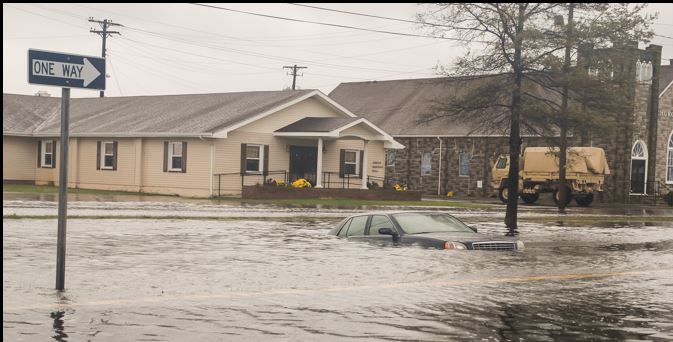
A photo showing flooding on the Eastern Shore of Maryland at Crisfield. Credit-Wikipedia -Public Domain.
Delaware
Northern counties picked up 6 to 7 inches if rain and there were numerous trees and power lines down. Route was closed due to water inundation between Dewey Beach and Fenwick Island In Dewey Beach, flood waters were 1 to 2 feet in depth. Following the impact in Delaware, President Barack Obama declared the entire state a federal disaster area, providing money and agencies for disaster relief in the wake of Hurricane Sandy.
New Jersey
With Sandy’s landfall in New Jersey the state was hit particularly hard. A 50-foot piece of the Atlantic City Boardwalk washed away. Half the city of Hoboken flooded; the city of 50,000 had to evacuate two of its fire stations, the EMS headquarters, and the hospital. With the city cut off from area hospitals and fire suppression mutual aid, the city’s Mayor asked for National Guard assistance. The early morning of October 30th authorities in Bergen County evacuated residents after a berm overflowed and flooded several communities.
Police Chief of Staff Jeanne Baratta said there were up to five fee of water in the streets of Moonachie and Little Ferry. Rescues occurred in Carlstadt Baratta said the three towns had been “devastated” by the flood of water. At the peak of the storm, more than 2,600,000 customers were without power. There were 43 Hurricane Sandy-related deaths in the state Damage in the state was estimated at $36.8 billion.
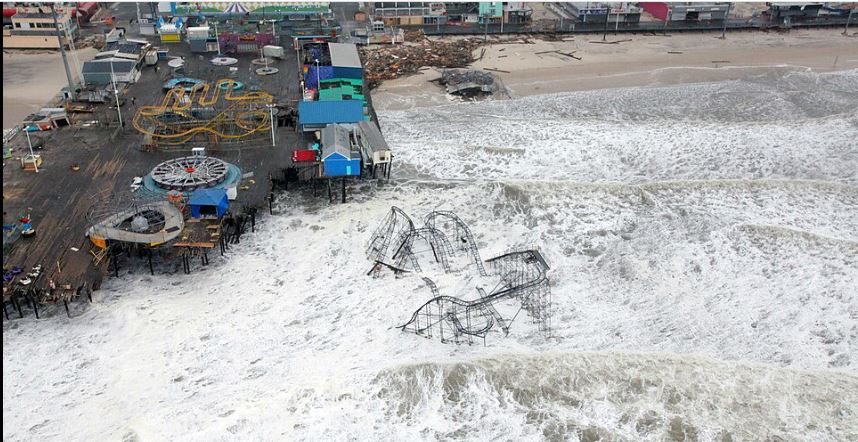
A photo showing damage to Casino Pier in Seaside Heights, New Jersey from Hurricane Sandy. Wikipedia-Public Domain.
Philadelphia Mayor Michael Nutter said the city would have no mass transit operations on any lines October 30th. All major highways in and around the city of Philadelphia were closed on October 29th during the hurricane, including Interstate 95.
Trees and power lines were downed in Altoona, and four buildings partially collapsed. The highest wind gust in the state’s history was recorded in Allentown on late on October 29th, where an 81-mile-per-hour wind gust occurred. More than 1.2 million were left without power. Fourteen deaths were believed to be related to Sandy.
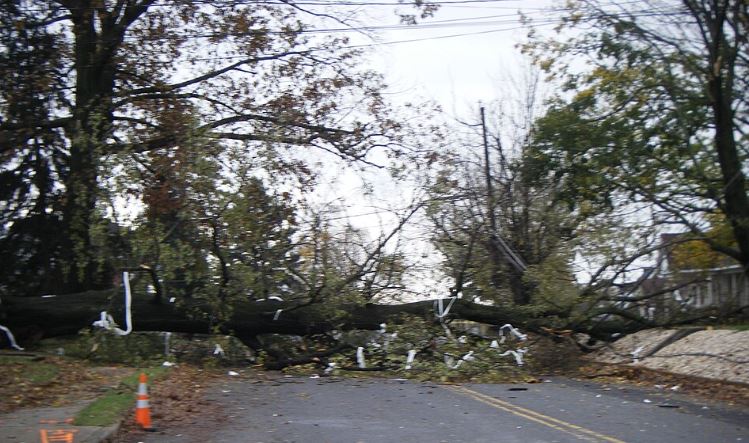
A photo showing downed trees from Sandy in Kutztown, Pennsylvania , Credit-Wikipedia-Public Domain.
New York
The New York Stock Exchange was closed for trading for two days, the first weather closure of the exchange since 1985. It was also the first two-day weather closure since the Blizzard of 1888.
Because Sandy mad landfall in New Jersey, south of New York City, the strong wind flow brought a high storm surge into New York City. The East River overflowed its banks, flooding large sections of Lower Manhattan. Battery Park had a water surge of 13.88 ft. Seven subway tunnels under the East River were flooded. The Metropolitan Transit Authority said that the destruction caused by Sandy was the worst disaster in the 108-year history of the New York City subway system. Homes along the shores were damaged.
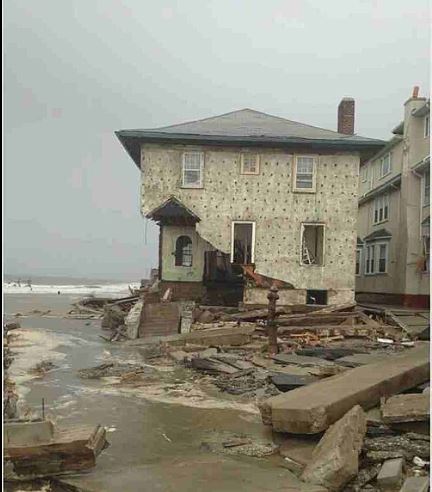
A photo showing damage to a house in Brooklyn, New York, from Sandy. Credit-Wikipedia-Public Domain.
Over 10 billion gallons of raw and partially treated sewage were released by the storm, 94% of which went into waters in and around New York and New Jersey. More than 200 wastewater treatment plants and over 80 drinking water facilities along the coast of the Tri-State area had been damaged beyond function, with a statement from Governor Cuomo that damage in New York treatment plants alone could reach $1.1 billion. The resulting damage caused more than 10 billion gallons of raw sewage to be released into New York and New Jersey water sources. This contamination resulted in the shutting down of several drinking-water facilities.
Gas shortages throughout the region led to an effort by the U.S. federal government to bring in gasoline and set up mobile truck distribution at which people could receive up to 10 gallons of gas, free of charge. This caused lines of up to 20 blocks long and was quickly suspended.
On November 26th, Governor Cuomo called Sandy “more impactful” than Hurricane Katrina, and estimated costs to New York at $42 billion. Approximately 100,000 residences on Long Island were destroyed or severely damaged, including 2,000 that were rendered uninhabitable. There were 53 Hurricane Sandy-related deaths in the state of New York. In 2016, the hurricane was determined to have been the worst to strike the New York City area since at least 1700.
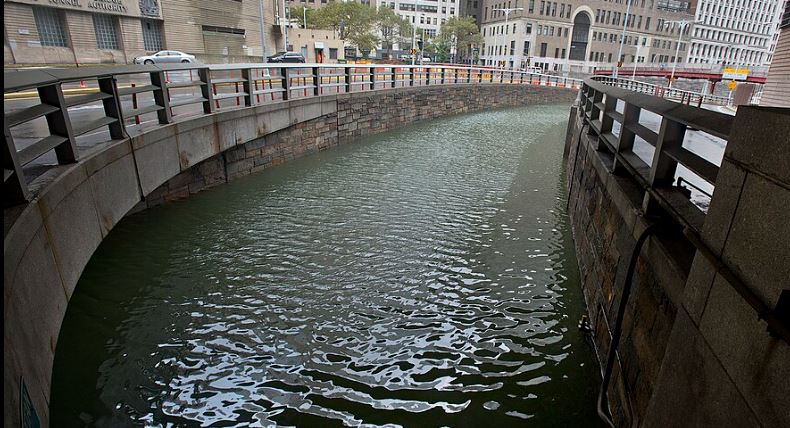
A photo showing the Brooklyn-Battery Tunnel still flooded the day after Sandy mad landfall. Credit-Wikipedia-Public Domain.
New England
Wind gusts to 83 mph were recorded on outer Cape Cod Nearly 300,000 customers were without power in Massachusetts, and roads and buildings were flooded. Over 100,000 customers lost power in Rhode Island. Most of the damage was along the coastline, where some communities were flooded. Mount Washington, New Hampshire, saw the strongest measured wind gust from the storm at 140 mph. Nearly 142,000 customers lost power in the state.
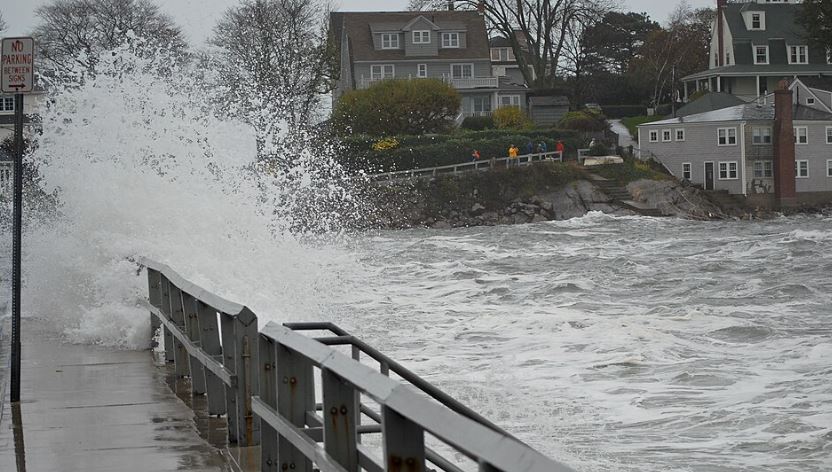
A photo showing flooding in Marblehead, Massachusetts, from Sandy, Credit-Wikipedia-Public Domain.
The flooding caused by Hurricane Sandy overwhelmed water treatment infrastructure on the northeast coast of the United States.
West Virginia
Precipitation fell as snow in the Appalachian Mountains, leading to blizzard conditions in some areas, especially West Virginia, There was 1–3 feet of snowfall in 28 of 55 counties. By the morning of October 31st , there were still 36 roads closed due to downed trees, power lines, and snow in the road. Approximately 271,800 customers lost power during the storm.
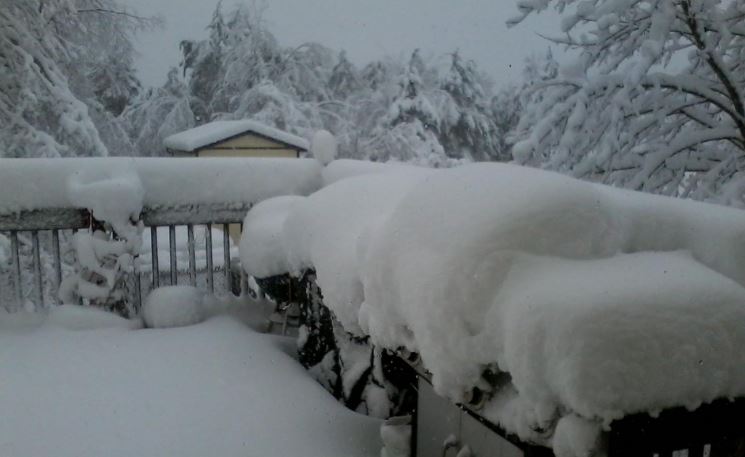
A photo showing snow in West Virginia from Sandy, Credit-Wikipedia-Public Domain.
Damage extended all the way back to Ohio and Michigan from strong winds as the remnants moved toward Lake Erie.
Miscellaneous
The destruction of infrastructure as a result of Sandy cost impacted states, including New York and New Jersey, tens of billions of dollars. EQECAT, a risk-modeling company that focuses on catastrophes, approximated that impacted regions lost between $30 billion to $50 billion in economic activity. The economic loss was attributed to the massive power outages, liquid fuel shortages, and a near shutdown of the region’s transportation system.
Pre Sandy Landfall – Confusion and Controversy – My Perspective
I indicated earlier that the forecast for Hurricane Sandy was generally good. Computer models seemed to have good handle on it (especially the EMCWF/European model). I was not affiliated with the National Hurricane Center or the National Weather Service but I was at The Weather Channel as a Lead Forecaster on duty in the hours before and after Sandy made landfall on October 29th, 2012.
During the day, Hurricane Sandy was undergoing a transition from a tropical system (hurricane) to a non-tropical system (post tropical). It was expected to make landfall in the early evening. It did at about 7:30).
During the time when Sandy was (tropical) it was under the purview of the National Hurricane Center and they issued all statements, warnings, forecast tracks and other info to the public. When a tropical system loses its tropical characteristics (I won’t go into that now) all information and forecasts are switched to the local National Weather Service offices that will be impacted. The storm is then deemed (post tropical)
For most of the afternoon, I was expecting NHC to call Sandy (post tropical) allowing the National Weather Service offices (from the Mid-Atlantic area to proceed to their protocol, their maps and graphics to communicate to thee public, As thee afternoon wore on, NHC kept Sandy as a hurricane. When the clock approached 5 p.m. I assumed that they would keep Sandy as a hurricane until landfall and they would be responsible communicating information to the public and other entities that use the information for the good of the public.
Suddenly, at 5 p.m. NHC issued a statement that Sandy was post tropical, Does the general public know what that means? Some they thought that Sandy was no longer a hurricane, but what that mean ? The National Weather Service Offices that cover the impact areas had to quickly gear up on what information and what maps to use.
Most of the public that was following Hurricane Sandy was getting their information from the NHC and NWS information was not received by many. When I saw that the NHC dropped Sandy from hurricane status so close to landfall I reacted strongly at TWC “what are they doing” I said (more or less),
The Weather Channel did a great job (both from our studio and in thee field) or sorting all of this out and our forecasts were excellent all the way through the event (for those who were getting information from us !
The defense of the NHC was that technically, Sandy had lost tropical characteristics and was no longer a hurricane. Technically, the could have had a point but to do this so late was not in the interest of the public and other users of the information.
Later on. Stu Ostro, a senior meteorologist at TWC researched this matter and found that Sandy still had some tropical characteristics. so keeping sandy a hurricane until landfall and than calling it post tropical would have been a better move in my opinion !


