
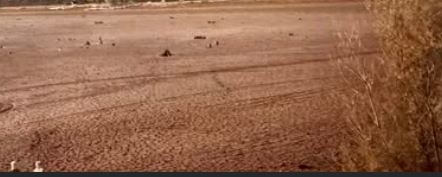
As the calendar switches from June to July we often let our guard down when it comes to weather. We may think of summers with occasional hot spells and pop up thunderstorms. There can be some notable or even historic events, however, They can run the gambit from severe weather, drought, floods, extreme heat and even tropical storms and hurricanes.
The summer of 1988 brought on of the worst droughts in U.S. history. The drought produced extreme negative impacts with a considerable loss of life. We’ll investigate the causes of the drought, its main impacts, related impacts (heat and fires) and how the media, including The Weather Channel where I worked, covered it.
Drought Factors
One of the main factors that led to the drought was La Niña conditions in the eastern Pacific. Atmospheric conditions, conducive to drought, had already begun in March of 1988. The Intertropical Convergence Zone in the eastern Pacific shifted.
There were unusually high levels of outgoing long wave radiation over the Gulf of Mexico, the southeastern United States, and northeastern South America. Scientists have observed similar anomalies in outgoing long wave radiation in the majority of major drought events in North America.
Prevailing winds in the Spring of 1988 were from dry desert areas rather than from the Gulf of Mexico. The overall dry conditions became apparent by the end of April. By early June, the entire Great Plains region of the U.S. had received less than one half of their average precipitation.
By then the dryness has spread into the Corn Belt. From March to May, Des Moines, Iowa had only received 30 percent of their average precipitation.
Summer of Drought and Heat
As 1988 moved into summer the drought began to feed on itself. A massive ridge of high pressure aloft dominated much of the U.S. and its effects were widespread. Under a dome of high pressure, the air sinks and warms which makes temperatures rise and clouds difficult to form or develop.
Areas of low pressure and their attending fronts were shunted far to the north. Soil moisture was low, so there was little evaporation into the atmosphere for afternoon thunderstorms.
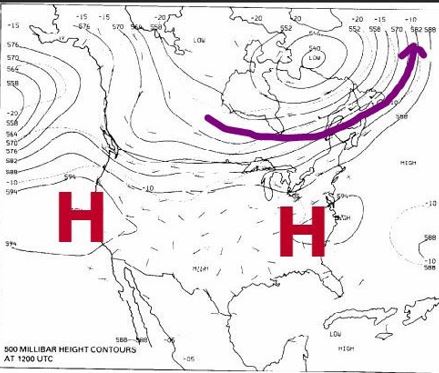
An upper-level (500 millibar) chart from July of 1988 shows massive ridges of high pressure across much of the U.S. with the jet stream/storm track far to the north. Chart Credit-NWS.
The peak of the heat and drought began around the 8th and 9th of July Below is an example (from WeatherForYou.com)
July 9th, 1988. – Twenty-three cities in the eastern U.S. reported record high temperatures for the date. Alpena, MI, and Buffalo, NY, suffered through their sixth straight day of record heat. The percentage of the total area in the country in the grips of severe to extreme drought reached 43 percent, the fourth highest total of record. The record of 61 percent occurred during the summer of 1934. (From The National Weather Summary).
Below is a drought severity map that appeared on The Weather Channel on July 11, 1988.
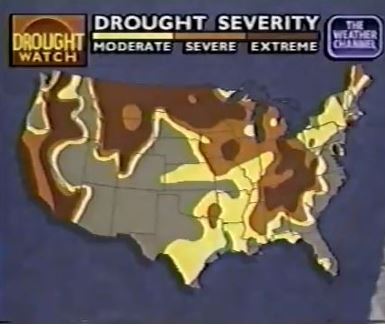
The event extended through July – Here is another example from July 15th, 1988.
1988 – Twenty-six cities east of the Mississippi River reported record high temperatures for the date. Charleston, WV, established an all-time record high
The heat and drought expanded into the Southeast. I remember moving into a new house northwest of Atlanta, Georgia and from the last week of June through the first week of August we never saw a drop of rain. My new lawn was ruined as were many others across a significant number of states.
it was becoming quite apparent that there would be massive crop failures. The number of fatalities from heat stress continued to rise. The drought and heat were making national news and the story would last for quite some time.
Media Coverage
The weather was suddenly becoming a major news item during the summer of 1988. Heat and drought, rather than the usual severe thunderstorms, became the main story.
Each night on the major news networks, this weather would of often take the lead. I was with The Weather Channel at the time, and we decided to put major emphasis on this topic. We began by interjecting drought updates into our regular on-air segments.
That didn’t seem to be enough, however, and it was finally decided that we would produce a on- hour show which would be called “Drought Watch” and it would appear several times a week. The show would include the main anchor and guest meteorologists, climatologists, government officials, agriculture and water management experts, etc. Calls from viewers would also be taken.
At that time, putting this this was quite a chore f, with our limited resources. We had to broadcast from an alternate studio. There were long electrical cords and phone lines extending out of the room.
After about a month, we were running out of expert guests to bring in so we used some of our own Meteorologists and On-Camera Meteorologists as guests. I remember being a guest on four different occasions. It got to the point where we often strayed from the topic with the questions that we were getting so we shut the program down. Below is a snapshot of a promo that we ran on TWC with one of our anchors. John Doyle.
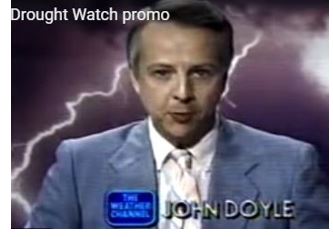 An image of The Weather Channel promo for their Drought Watch show, with anchor John Doyle, that was broadcast during the summer of 1988. Image Credit- TWC on YouTube
The Weather Channel did sponsor a one-day “Drought Symposium” where we invited meteorologists, college professors, and other experts to engage in a discussion, plus questions and answers. The event, which I attended, was televised on TWC but I can’t find any information about it or any footage. The event was held at a hotel in the Galleria Complex in Cobb County, Georgia.
Impacts
The 1988 drought was the worst since the “Dust Bowl” days of the 1930s. The total cost of damages inflicted on agriculture and related industries totaled over 70 billion dollars (nearly 200 billion in 2026 dollars) . Overall damage in the U.S. was probably double that amount.
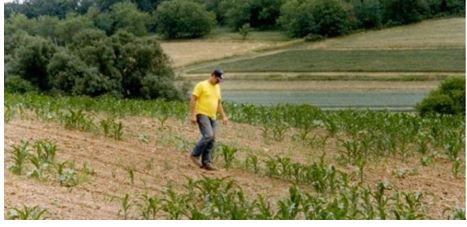 This photo shows a Wisconsin farmer evaluating his struggling corn crop during the summer of 1988. Photo Credit-L Roger Tuner-Wisconsin State Journal Archives.
The death toll from the relentless heat in the central and eastern U.S. was estimated to be from 5,000 to 10,000.
Parts of the Mississippi River was reduced to a mere trickle and it was unnavigable. This cost the shipping industry up to one billion dollars. There were sandbars all over the river and long forgotten shipwrecks were exposed.
At its peak, about forty- five percent of the nation was experiencing drought or severe drought conditions.
In the northern Rockies, the Yellowstone Fires collectively formed the largest wildfire in the recorded history of Yellowstone National Park.
Initially, there were many small fires but flames quickly spread out of control due to the drought and increasing winds and became one massive fire. It nearly destroyed two major visitors centers and on September 8, 1988, the entire park closed to all non-emergency personnel for the first time in its history.
Fortunately, the drought began to show some cracks in September as the upper-level weather pattern began to change a bit. Rain from Hurricane Gilbert moved up from Mexico to Texas and the southern Plains and into the Midwest and Great Lakes later in the month.
It was not nearly enough, however, and major damage had already been done. Hopefully, we won’t experience anything like this again for a long time.


