
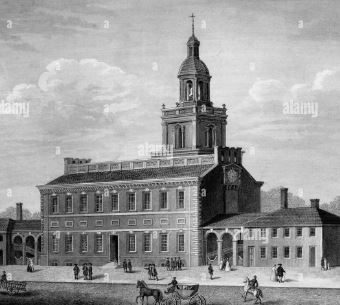
HAPPY 250th ANNIVERSARY U.S.A !!!!
Saturday, July 4th, 2026, is a huge anniversary for our nation ! There will be parades and celebrations galore across this great country of ours. Over time, residents have seen a vast variety of weather and some events have been historic with high property damage and huge death tolls. Included are strong hurricanes, large tornado outbreaks, overwhelming floods, deadly heat waves, severe blizzards and bone-chilling cold.
There was nothing like that in Philadelphia on July 4th, 1776, except for a coolish morning. but there was an amazing coincidence regarding the afternoon temperature as recorded by Thomas Jefferson and others !
Weather Records – July 1-3, 1776
In 1776, weather observations were few and far between. Weather instruments were quite costly and most weather observers – those who kept weather diaries, at least – were wealthy. Thomas Jefferson was one of them; he kept meticulous weather records in a journal for many years.
Jefferson traveled to Philadelphia at the beginning of July to attend a meeting of the Second Continental Congress and to prepare and sign the Declaration of Independence.
He brought his thermometer on the trip, but while he was in Philadelphia, Jefferson purchased a new one from a merchant, John Sparhawk, for a sum that would be equivalent to $300 in today’s currency.
According to the website monticello.org., Thomas Jefferson liked to take at least two weather observations per day. One would happen around sunrise, so he could log the low temperature of the day, and another was between 3 and 4 p.m. when the high temperature usually occurred. He would also list remarks like cloud cover, precipitation and whether or not it was humid.
According to Franklin Facts, a segment on WHYY TV, there was another prominent resident of Philadelphia, Phineas Pemberton, who logged daily weather conditions, as well as Christopher Marshall, who kept a weather diary. From these entries, we can formulate a picture of weather conditions during that first week of July, including the Fourth.
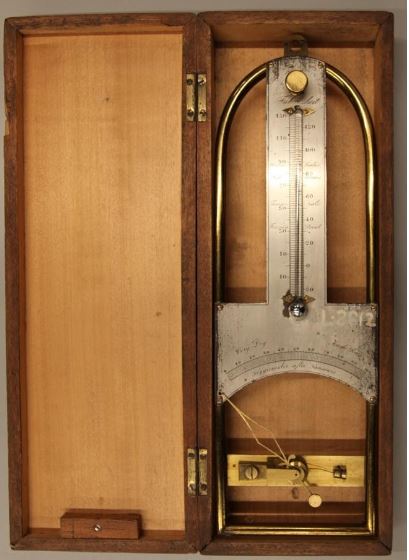
Weather instruments used in the late 1700s to measure temperature, barometric pressure and moisture. Image Credit-Yale University Archives .
According to these records, July 1 was warm and humid with temperatures well up into the 80s. The day was mostly sunny, but around 4 p.m., the sky turned dark, winds came up and thunderstorms developed around the area.
Temperatures came down a bit on July 2, but there were frequent showers reported. July 3 was a pleasant, sunny day, with a high near 80 degrees.
Weather Conditions on July 4, 1776
Using observations from Jefferson, Pemberton and Marshall, we can piece together a very good picture of that day’s weather. Jefferson didn’t record an observation between 3 and 4 o’clock but he did at 1 p.m.
Here are Thomas Jefferson’s daily weather observations taken in Philadelphia in July 1776. Image Credit-NOAA.
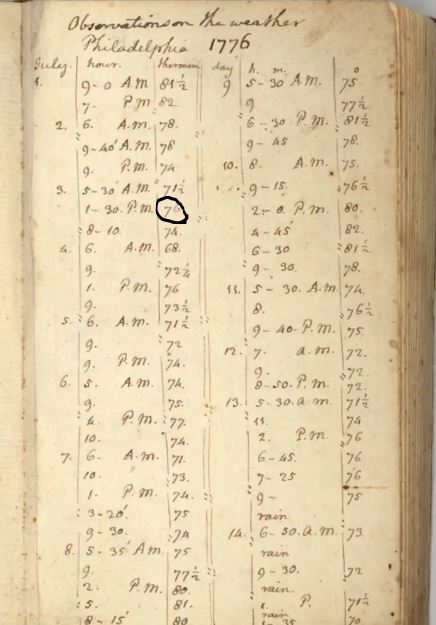
Overall, the Fourth of July was a pretty good day in Philadelphia. The high temperature was in the mid-70s and there was no rain. These days, Philly’s average July 4 high is 87 degrees. Even if the average high back then was a little cooler than it is now, that temperature is still mild.
July 4 began with clear skies and temperatures in the upper 60s. The wind was light out of the north. By midday, there were a few clouds and the wind switched to a southeasterly direction. In the afternoon, the temperature rose to the mid-70s as winds switched to the southwest, clouds increased and humidity levels rose.
Here are the observations from Jefferson on July 4, 1776:
6 a.m. 68 degrees Clear/light north wind
9 a.m. 72 degrees Mostly sunny
1 p.m. 76 degrees Increasing clouds
Here are the observations from Pemberton on July 4, 1776: 76 degrees Cloudy/southwest wind
It seems appropriate that BOTH men recorded a temperature of 76 degrees that afternoon !
Marshall wrote that the wind switched from the southeast to the southwest during the afternoon and it became more humid, while other reports indicated that the barometric pressure fell .25 inches of mercury, or 7.5 millibars, during the day. The exact barometric pressure reading, however, is unclear.
My Conjecture – July 1-4, 1776
There were no weather maps in 1776, but people like Jefferson kept enough weather records to formulate opinions (and pretty good ones) about general weather patterns. As a meteorologist, and just for fun, I like to gather weather information and speculate about what the general surface weather pattern could have looked like.
Starting on July 1 in Philadelphia, it was very warm and humid with afternoon thunderstorms. There was likely a moist flow of southwesterly winds with a cold front approaching. Since there were lots of clouds and showers on July 2, there was either a secondary front that passed through, or perhaps the original cold front passed through slowly.
July 3 was sunny and mild, so a high-pressure system was likely moving toward the Philadelphia area. The high was probably on the weak side, since high and low temperatures were moderate.
The clear sky and light north wind on the morning of July 4 was indicative of the high-pressure system approaching the area. Dry and mild conditions probably prevailed across much of the Northeast and mid-Atlantic regions on that day.
In Philadelphia, the wind shifted to the southeast and then to the southwest in the afternoon, and the barometric pressure fell. That means the high-pressure system likely moved eastward into the Atlantic, and since winds around high-pressure systems flow clockwise, the return wind flow would be out of the southwest.
There could have been another cold front west of the area, but there was no mention of rain by Jefferson until July 8, so perhaps the next front was well out to the west.
July 4, 2026 Philadelphia Forecast
July 4th looks much hotter than it was 250 years ago. They will experience what many Meteorologists call the three H’s (Hazy, Hot and Humid). There will be a chance of pm to evening thunderstorms with a high temperature around 100 degrees and a heat index up to 105 degrees. This will also be the case across most of the eastern U.S. Take all precautions to protect yourself from the heat and sun and stay hydrated !


